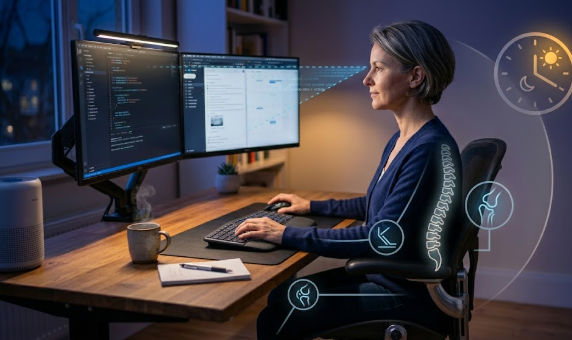
Sitting for twelve hours a day is hard on a body, and most chairs that feel fine for an hour become an ache by hour seven. Marathon sitters, whether they are developers, traders, gamers, or anyone working extended shifts, need more than a comfortable seat; they need a chair that supports the spine consistently, distributes pressure so nothing goes numb, and, crucially, lets the body shift and move rather than locking it into one position. This guide covers the best office chairs for long hours in 2026, along with an honest note that matters even more at this extreme: no chair makes twelve hours of sitting healthy on its own.
We will get to that caveat, but first the chairs. If you want the wider field, our roundup of the best ergonomic chairs for back pain covers every use case, while this guide focuses specifically on what holds up over very long sessions.
What matters most for very long sitting
Over a twelve-hour day, a few qualities separate a chair that stays comfortable from one that does not. The first is adaptive, dynamic support: a backrest that flexes and follows you as you shift suits long sitting far better than rigid support, because you will inevitably change position dozens of times. The second is a pressure-relieving seat, whether breathable mesh that stays cool over many hours or high-density foam that does not bottom out and create hot spots. The third is full adjustability, including seat depth, recline with a lock, and four-dimensional armrests, so you can vary your posture throughout the day rather than holding one. The fourth is build quality and a long warranty, because twelve-hour daily use is punishing, and a chair with a twelve-year warranty effectively costs less per year than a cheap chair that fails in two.
The best office chairs for long hours in 2026
Steelcase Leap V2 — Best overall for long hours and value
The Steelcase Leap V2 is repeatedly named the top choice for pure long-hours comfort, and it is excellent value, especially bought refurbished. Its LiveBack backrest flexes with your spine as you move and recline, maintaining support across the countless position changes a long day involves, and its padded seat stays comfortable over marathon sessions where firmer chairs start to bite. With deep adjustability and a twelve-year warranty, it is the chair we would recommend to most people who sit for very long stretches. For how it compares to the other premium icon, see our Steelcase Leap vs Herman Miller Aeron breakdown.
Herman Miller Embody — Best for marathon comfort and movement
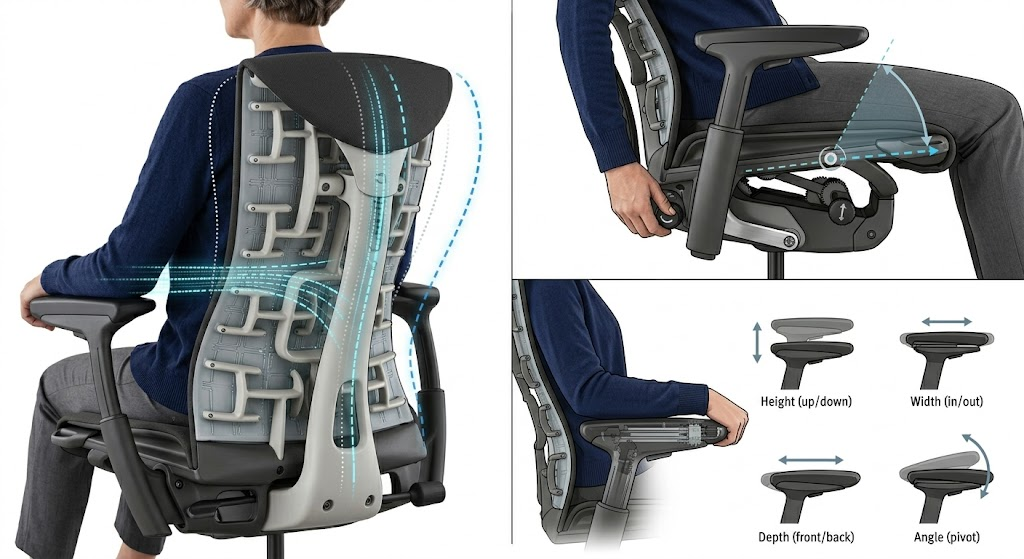
The Herman Miller Embody is built around movement, which makes it superb for very long sessions. Its BackFit system uses a matrix of flexible pixels that move with even small shifts in your weight, encouraging the constant micro-movements that keep you comfortable when you cannot get up. Reviewers consistently describe it as remarkably comfortable for long sessions, with no fatigue even over twelve-hour test days. It is a premium investment, but for people who want a chair that actively supports movement through a marathon day, it is a standout. Our Embody vs Aeron comparison covers how it stacks up against its sibling.
Branch Verve — Best all-day comfort with style and value
The Branch Verve has become a favourite for delivering genuine all-day comfort at a more accessible price than the premium icons. Its soft, breathable 3D-knit backrest, adjustable lumbar support, and clean design keep you comfortable over long sessions while looking more like home furniture than an office chair, and it is backed by a seven-year warranty. For long-hours sitters who want premium-feeling comfort without a four-figure price tag, it is an easy recommendation.
Boulies OP300 / EP500 — Best for posture flexibility
Boulies chairs are purpose-built for sustained all-day focus, and they shine for people who move between positions. Models like the OP300 add a forward-tilt seat mechanism and full posture flexibility, while the chiropractor-designed EP500 brings self-adaptive lumbar support, generous armrest adjustment, and a wide, supportive seat. They are especially well suited to anyone who shifts between leaning forward, sitting upright, reclining, and even non-standard positions through a long day, and they offer this adaptability at a competitive mid-range price.
Sihoo Doro C300 — Best budget for long hours
If you sit long hours but cannot stretch to a premium chair, the Sihoo Doro C300 is the budget standout, thanks to a self-adaptive lumbar system that follows your spine as you move, an idea borrowed from far pricier chairs. Add adjustable seat depth, adjustable armrests, and a breathable mesh back, and you have a chair that supports long sessions well for around the price of a single premium accessory. It is the smart pick for long-hours comfort on a budget; our guide to the best office chairs under $300 covers it and other affordable options in more depth.
At-a-glance comparison
The table below summarises the picks above. Prices are approximate United States figures and can change, so always confirm current pricing before buying.
| Chair | Best for | Standout strength | Approx. price |
|---|---|---|---|
| Steelcase Leap V2 | Overall & value | LiveBack, padded comfort | ~$650 (refurb) – $1,100 |
| Herman Miller Embody | Marathon comfort & movement | Dynamic BackFit support | ~$1,800+ |
| Branch Verve | All-day comfort & style | Soft 3D-knit back, value | ~$549 |
| Boulies OP300 / EP500 | Posture flexibility | Forward tilt, adaptive lumbar | ~$400 – $600 |
| Sihoo Doro C300 | Budget | Self-adaptive lumbar | ~$250 – $300 |
The honest truth about 12-hour sitting
Here is the part most chair guides leave out: no chair, however good, makes sitting for twelve hours healthy. A great chair reduces the strain and keeps you comfortable, but prolonged static sitting is itself the underlying problem, and the most important thing you can do is break it up. If your day genuinely involves twelve hours at a desk, the single biggest improvement is to interrupt it regularly, standing, stretching, or walking for a few minutes every half hour or so. A height-adjustable desk makes alternating between sitting and standing effortless, as covered in our best budget standing desks guide, and an under-desk treadmill lets you add gentle walking without leaving your work, which we cover in our best under-desk treadmills guide. Treat the chair as the foundation that makes the unavoidable sitting kinder, and movement as the thing that actually protects your long-term health.
Frequently asked questions
What makes a chair good for 12-hour sitting specifically?
Over very long sessions, the priorities are adaptive support that flexes as you shift, a seat that relieves pressure without bottoming out or overheating, full adjustability so you can vary your posture, and durable build quality with a long warranty. A chair that holds you rigidly in one position may feel fine briefly but tends to fatigue you over twelve hours, which is why dynamic chairs like the Leap and Embody excel here.
Is the Embody or the Leap better for long hours?
Both are excellent. The Embody is built around constant micro-movement, which many find supremely comfortable over marathon sessions, while the Leap offers a padded seat, adaptive LiveBack support, and outstanding value, especially refurbished. If you want active movement support and have the budget, lean Embody; if you want proven comfort and better value, lean Leap.
Can a good chair prevent back pain from long sitting?
It can significantly reduce the strain and keep you more comfortable, but it cannot fully offset the effects of sitting for very long periods, because prolonged static sitting is itself a risk factor. The most effective approach pairs a supportive chair with regular movement breaks, alternating between sitting and standing, and gentle exercise. The chair is essential, but it is not a substitute for getting up.
Is it worth paying for a 12-year warranty chair?
For heavy daily use, often yes. A premium chair with a twelve-year warranty effectively costs less per year than a cheap chair that fails within two, and it is built to withstand the punishment of long daily sessions. If you sit for very long hours every day, the durability and long-term comfort usually justify the higher upfront cost, and buying refurbished can bring premium chairs within reach.
The bottom line
For very long sitting, the best chairs are the ones that move with you and stay comfortable hour after hour. The Steelcase Leap V2 is the best all-rounder and value, the Herman Miller Embody is the marathon-comfort champion, and the Sihoo Doro C300 is the budget standout. Whichever you choose, remember the honest truth: the chair makes long sitting kinder, but breaking up that sitting with regular movement is what truly protects your back. Pair your chair with a way to stand and move, starting with our best under-desk treadmills guide.
Affiliate disclosure: This article contains affiliate links. If you buy a product through one of them, we may earn a small commission at no extra cost to you. This never influences which products we recommend.
Medical disclaimer: We are not doctors or physiotherapists, and this article is for general informational purposes only. It is not medical advice and should not replace consultation with a qualified healthcare professional. Prolonged sitting carries health risks that no chair can fully offset; if you have persistent, severe, or worsening back pain, please seek advice from a licensed medical provider.