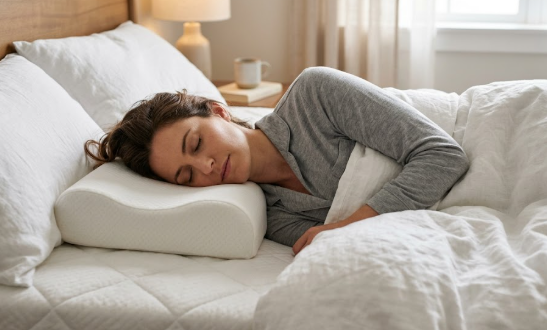
If you spend your day hunched over a screen, your neck takes a beating, and the eight hours you spend asleep are your best chance to let it recover. The problem is that the wrong pillow does the opposite. When your head sits too high, too low, or tilts to one side for hours, the muscles and joints of your cervical spine stay under low-grade tension all night, and that tension compounds the strain already built up at the desk into a vicious cycle of stiffness and soreness. A good cervical pillow breaks that cycle by holding your head and neck in neutral alignment, so your neck rests and recovers instead of working through the night.
This guide covers the best cervical pillows for neck pain in 2026, explains how to choose one based on how you sleep, and is written with desk workers in mind, whose neck pain usually starts at the keyboard. As one orthopedic surgeon put it, a simple pillow change can sometimes resolve neck pain that nothing else has touched, though, as we will see, the right fit is very individual. A pillow works alongside the daytime fixes, like getting your screen to eye level, covered in our best monitor stands guide.
How a cervical pillow helps
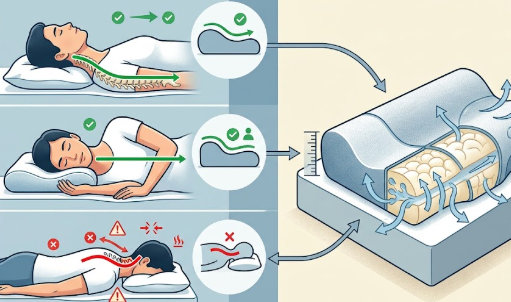
Neck pain during or after sleep is usually an alignment problem. The goal that sleep specialists and physical therapists point to is neutral spinal alignment: your head should rest at roughly the same height as your shoulders, with the natural inward curve of your neck, the cervical curve, gently supported rather than flattened or exaggerated. A cervical pillow, often made from contoured memory foam, is shaped to fill the gap between your neck and the mattress and cradle your head so that curve is maintained all night. For a desk worker whose neck is already fatigued by daytime posture, that overnight support is what allows the muscles to release instead of staying tense.
Choose based on how you sleep
Your sleeping position matters more than any single product, because it determines the loft, or height, you need. Side sleepers need a higher-loft pillow to fill the wider gap between the neck and the mattress created by the shoulder, keeping the spine level, and a contoured memory-foam pillow suits them well. Back sleepers need a medium loft with a contour that supports the cervical curve without pushing the head forward. Stomach sleepers, by contrast, need a thin, soft, low-profile pillow, because a high or firm cervical pillow forces the neck upward and backward; many contoured pillows are simply not suitable for stomach sleeping. Combination sleepers who switch positions are best served by an adjustable or flippable pillow that adapts. Because there is no single perfect height, an adjustable loft is one of the most useful features you can look for.
The best cervical pillows for neck pain in 2026
Saatva Memory Foam Pillow — Best overall
The Saatva memory foam pillow is a standout for cervical alignment, using a blend of shredded memory foam and latex that contours to the neck while keeping the spine straight, with graphite-infused foam and a breathable cotton cover that help hot sleepers stay cool. It strikes an excellent balance of support and comfort for back and side sleepers, and Saatva backs it with a generous trial so you can test the fit, which matters enormously with pillows. For most desk workers wanting a quality, well-supported night’s recovery, it is the reliable first choice.
Epabo Contour Memory Foam Pillow — Best value
The Epabo contour memory foam pillow is an affordable, widely recommended option that several orthopedic and physical-therapy experts point to for its central cradle and neck bridge, which support the head while maintaining the cervical curve. It comes in multiple sizes and suits side and back sleepers especially well, and it is sometimes recommended for side sleepers dealing with nerve-related neck pain because of that supportive central design. For an effective contour pillow without a premium price, it is the value pick.
Tempur-Symphony — Best for combination sleepers
If you switch positions through the night, the Tempur-Symphony is designed for exactly that, with a flippable design that offers one side optimised for back sleeping and the other for side and stomach sleeping. That lets you turn the pillow over to get appropriate neck and shoulder support in whichever position you land in, rather than compromising. Built from Tempur’s high-quality material, it is a premium but versatile choice for restless sleepers who still need consistent cervical support.
An adjustable-loft pillow — Best for dialing in your height
Because the right pillow height is so individual, an adjustable-loft pillow, one that lets you add or remove shredded fill or swap inserts, is a smart choice for anyone unsure of their ideal loft or who has struggled to find the perfect height. Shredded memory foam and kapok blends are moldable and breathable, and the ability to fine-tune the height to your specific shoulder-to-neck ratio means you can adapt the pillow to your body rather than the other way round. For people who have tried fixed pillows without success, adjustability is often the answer.
A low-profile soft pillow — Best for stomach sleepers
If you sleep on your stomach, most cervical contour pillows will hurt rather than help, because they hold your head too high. A thin, soft, low-profile pillow keeps your neck closer to neutral and reduces the backward strain that stomach sleeping puts on the cervical spine. Look for a slim, supportive design, often with a moisture-wicking cover, that cushions without lifting your head. It is the right shape for stomach sleepers who want neck relief without forcing a position change.
At-a-glance comparison
The table below summarises the picks above. Prices are approximate United States figures and can change, so always confirm current pricing before buying.
| Pillow | Best for | Type | Approx. price |
|---|---|---|---|
| Saatva Memory Foam | Overall (back & side) | Shredded foam + latex | ~$85 – $165 |
| Epabo Contour | Value (side & back) | Contoured memory foam | ~$30 – $40 |
| Tempur-Symphony | Combination sleepers | Flippable foam | ~$130 – $200 |
| Adjustable-loft pillow | Customising height | Shredded / insert-based | ~$75 – $160 |
| Low-profile soft pillow | Stomach sleepers | Thin foam / down-alternative | ~$30 – $60 |
Getting the fit right, and the daytime side
The most important advice with cervical pillows is to use the trial period, because the wrong height or firmness can actually make neck pain worse, causing headaches or jaw and neck ache, and what relieves one person can aggravate another. Give a new pillow a couple of weeks, and if it leaves you stiff, it is likely too high, too low, or too firm for you, so adjust or exchange it rather than persevering. Remember too that a pillow only addresses the night; the daytime cause of your neck pain still needs fixing. Raising your screen to eye level so your head stays balanced over your spine is the biggest daytime improvement, covered in our guides to the best monitor stands and the best laptop stands, and if you run two screens, our guide on setting up dual monitors helps. Good sleep and good daytime posture together break the cycle that a pillow alone cannot.
Frequently asked questions
Do cervical pillows really help neck pain?
For many people, yes, because they support the neck’s natural curve and keep the head in neutral alignment, letting the muscles rest overnight rather than staying tense. Experts note that a simple pillow change sometimes resolves chronic neck pain entirely. However, the right fit is very individual, and a poorly matched pillow can worsen pain, so the benefit depends on choosing the correct loft and firmness for your sleeping position.
What loft should I choose for my sleeping position?
Side sleepers generally need a higher loft to fill the gap created by the shoulder, back sleepers need a medium loft that supports the cervical curve, and stomach sleepers need a thin, soft, low-profile pillow to avoid forcing the neck back. If you switch positions or are unsure, an adjustable or flippable pillow lets you fine-tune the height to keep your head level with your shoulders.
Can the wrong pillow cause neck pain?
Yes. A pillow that is too high, too flat, too firm, or the wrong shape for your sleeping position keeps your head at an awkward angle, putting the cervical spine under sustained tension that leads to morning stiffness and soreness. This is why people sometimes wake with neck pain they did not have the night before, and why the right pillow can make such a difference.
Will a cervical pillow fix neck pain caused by desk work?
It helps with the recovery side by supporting your neck overnight, which is important when daytime posture has left it fatigued. But it does not address the daytime cause, so it works best combined with fixes at the desk, such as raising your screen to eye level and taking regular breaks. Persistent neck pain, or pain from a condition like arthritis or a disc problem, should be assessed by a healthcare professional.
The bottom line
For desk workers, a cervical pillow turns the night into recovery time for a neck strained all day, as long as it matches how you sleep. The Saatva memory foam pillow is the best all-round choice, the Epabo contour is excellent value, and an adjustable-loft pillow is ideal if you are unsure of your perfect height. Match the loft to your sleeping position, use the trial period to confirm the fit, and pair good sleep with daytime fixes like a screen at eye level. To complete the picture, see our guide to the best monitor stands.
Affiliate disclosure: This article contains affiliate links. If you buy a product through one of them, we may earn a small commission at no extra cost to you. This never influences which products we recommend.
Medical disclaimer: We are not doctors, physiotherapists, or sleep specialists, and this article is for general informational purposes only. It is not medical advice, diagnosis, or treatment. Pillow needs vary from person to person, and what helps one individual may not help another. If you have persistent, severe, or worsening neck pain, or neck pain accompanied by numbness, weakness, or radiating symptoms, please consult a qualified healthcare professional.