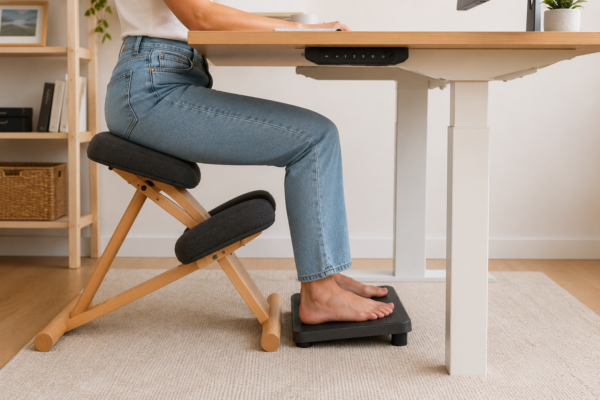
We invest in standing desks and ergonomic chairs, then forget the foundation of our posture: our feet. If your feet dangle, or you find yourself tucking them under the chair or crossing your ankles to get comfortable, the problem often traces all the way up to your lower back. It is a simple chain reaction. Standard desks are built around an average height, so shorter users end up with dangling feet, and dangling feet mean no support, which tilts the pelvis backward, rounds the spine, and strains the lower back. A footrest is the cheapest, most overlooked way to break that chain.
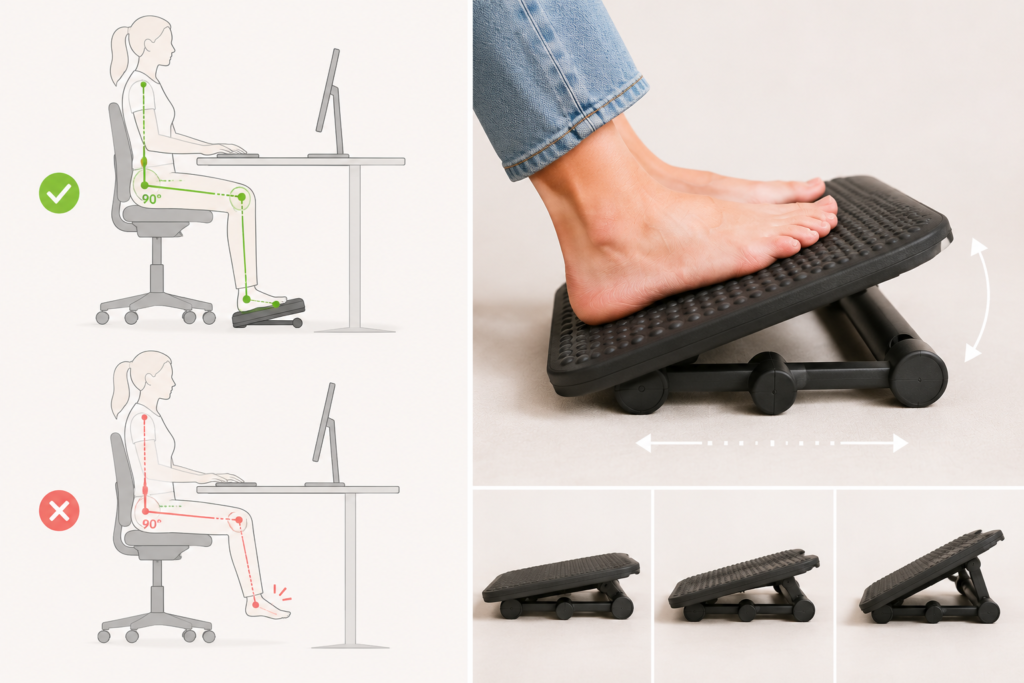
A good under-desk footrest restores the position your body actually wants, feet supported, knees at roughly a right angle, thighs parallel to the floor, and keeps your legs gently active so circulation does not stall. In this guide we cover the best office footrests for back pain relief in 2026, explain what to look for, and show you how to use one properly. One honest note up front, repeated by ergonomics specialists: a footrest is not a substitute for a properly fitted chair, but it is a powerful and inexpensive complement.
How a footrest helps your back
Most desks sit around twenty-eight to thirty inches high, which suits someone around five foot ten. If you are shorter than that, setting your chair high enough to type comfortably leaves your feet hanging, with no support beneath them. That lack of support lets your pelvis roll backward, which flattens the natural curve of your lower spine and rounds your back, the exact posture that produces aching by mid-afternoon. A footrest fills the gap, giving your feet a stable surface at the right height so your pelvis stays neutral and your spine keeps its healthy shape. Many footrests also tilt or rock, and that gentle motion matters more for circulation than for comfort, keeping blood flowing and preventing the numb, heavy feet that come from holding one static position all day.
What to look for in a footrest
Adjustability is the feature worth paying a little extra for. An adjustable height lets you match the footrest to your chair and desk, and an adjustable or free-floating tilt lets your feet move rather than locking flat, which is better for circulation; even ten to fifteen degrees of rocking helps. Look for high-density foam or a solid build that will not collapse under pressure, a non-slip base so it stays put when you shift, and a surface that is textured enough to grip without aggressive massage bumps that become annoying over hours. If you use a standing desk, some footrests add an upper bar so you can shift your weight while standing too. Match the height range to your body, since the most common complaint with cheap models is that they do not raise the feet enough for shorter users.
The best office footrests for back pain relief in 2026
Humanscale FM300 — Best overall
The Humanscale FM300 is the footrest to beat for most people. Its smooth, free-floating gliding motion keeps your legs active all day rather than locking them in a fixed position, the build quality is excellent, and it feels more natural than stepped, locking platforms. It is a premium pick at a higher price than basic foam models, but for anyone who spends long hours at the desk and wants a footrest that genuinely encourages movement and lasts for years, it is the standout choice.
Kensington SmartFit — Best adjustable footrest
The Kensington SmartFit is a favourite for its versatility, offering adjustable height across a useful range and a tilt that adjusts up to around thirty degrees, controlled by a simple foot pedal so you can change position without bending down. Its memory-foam surface and non-slip base keep it comfortable and planted, and it suits a wide range of users and chair heights. For people who want to dial in the exact height and angle for their body, it is the practical, mid-priced pick.
Cushion Lab Ergonomic Foot Rest — Best premium foam
If you want a cushioned footrest that is a clear step up from cheap blocks, the Cushion Lab uses genuinely dense, supportive foam that holds its shape rather than flattening under your feet. Its ergonomic contour supports the feet comfortably for long sessions, and it pairs well with the brand’s seat and lumbar cushions for a coordinated setup. It is the choice for those who prefer a plush, supportive surface with real foam quality.
Everlasting Comfort Foot Rest — Best budget pick
The Everlasting Comfort footrest is one of the most popular budget options for a reason: it offers soft, supportive high-density memory foam and a teardrop shape that lets you flip it for a gentle rocking motion, all at an entry-level price. It is ideal for home offices where shoes are optional and you want a plush, warm surface underfoot. For anyone who wants to try a footrest without spending much, it is a reliable, low-risk starting point.
StrongTek Wooden Rocking Footrest — Best for durability and movement
For those who prefer a firmer surface and a built-to-last design, the StrongTek wooden rocking footrest lets you roll your ankles and shift position freely throughout the day, supporting active feet with a sturdy platform that comfortably holds significant weight. Created by a small business to tackle their own back pain, it is a durable, no-nonsense option for people who found plastic adjustable models flimsy or short-lived.
At-a-glance comparison
The table below summarises the picks above. Prices are approximate United States figures and can change, so always confirm current pricing before buying.
| Footrest | Best for | Type | Approx. price |
|---|---|---|---|
| Humanscale FM300 | Overall | Free-floating glider | ~$119 |
| Kensington SmartFit | Adjustability | Height & tilt adjustable | ~$40 – $50 |
| Cushion Lab | Premium foam | Contoured foam | ~$55 |
| Everlasting Comfort | Budget | Memory foam, rocking | ~$29 |
| StrongTek Wooden | Durability & movement | Wooden rocker | ~$35 – $45 |
How to use a footrest correctly
First, set your chair to the right height for your desk so your elbows sit at about ninety degrees while typing, the correct way round to adjust. If that leaves your feet dangling or only your toes touching the floor, that is exactly when a footrest earns its place. Position it so your feet rest flat with your knees at roughly a right angle and your thighs parallel to the floor, and choose a height that achieves that without pushing your knees up too high. If your footrest tilts or rocks, use that motion to keep your ankles and legs moving through the day rather than locking them flat. And remember it works alongside the rest of your seating, so if your tailbone or lower back also needs support, pair it with options from our guides to the best seat cushions and best lumbar support.
If you have a sit-stand desk, a footrest still helps during your standing intervals when paired with one that has a bar to rest a foot on, complementing an anti-fatigue mat from our best standing desk mats guide. The footrest fixes the seated side; the mat looks after the standing side.
Frequently asked questions
Do I really need a footrest?
You probably benefit from one if, when your chair is set correctly for your desk, your feet do not rest flat on the floor, or if you catch yourself crossing your ankles or tucking your feet under the chair. Dangling feet leave your lower body unsupported and can tilt your pelvis and strain your lower back, and a footrest restores the supported position simply and cheaply. Taller users whose feet already rest flat may not need one.
Is a footrest a substitute for a good chair?
No. A footrest is a complement, not a replacement. The right approach is to fit your chair to your body and desk first, then add a footrest if your feet still do not reach the floor comfortably. Used together, a properly fitted chair and a footrest support your posture from the lower back all the way down to your feet.
Should a footrest tilt or stay flat?
A footrest that tilts or rocks is generally better, because the gentle movement keeps blood flowing and helps prevent the numb, heavy feet that come from holding a single static position. A flat surface is fine for short sessions, but for long workdays, even a small amount of rocking motion makes a noticeable difference to circulation and comfort.
What height should a footrest be?
The right height is whatever lets your feet rest flat with your knees at roughly a right angle and your thighs parallel to the floor, once your chair is set correctly for your desk. This varies by person and chair, which is why an adjustable footrest is worth the small extra cost; it lets you fine-tune the height rather than guessing with a fixed block.
The bottom line
A footrest is the quiet hero of an ergonomic setup, fixing the dangling-feet problem that quietly strains so many lower backs. The Humanscale FM300 is the best all-round choice with its gliding motion, the Kensington SmartFit is the most adjustable, and the Everlasting Comfort is a great budget pick. Set your chair correctly first, add a footrest if your feet do not reach the floor, choose one that lets your feet move, and you will support your posture all the way down. For a footrest aimed at your standing intervals, see how it pairs with the anti-fatigue options in our best standing desk mats guide.
Affiliate disclosure: This article contains affiliate links. If you buy a product through one of them, we may earn a small commission at no extra cost to you. This never influences which products we recommend.
Medical disclaimer: We are not doctors or physiotherapists, and this article is for general informational purposes only. It is not medical advice and should not replace consultation with a qualified healthcare professional. If you have persistent, severe, or worsening back pain, please seek advice from a licensed medical provider.