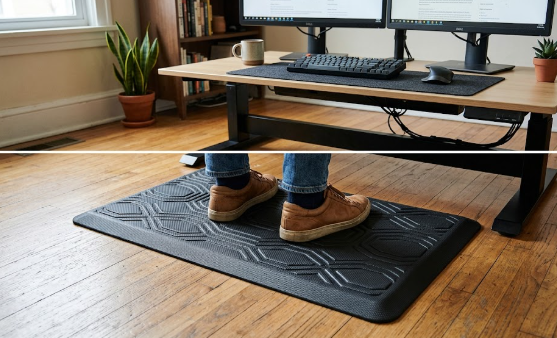
A standing desk is one of the best ways to break up a sedentary workday, but if you stand on a hard floor for hours, you quickly trade back stiffness for sore feet, tired legs, and a fresh ache in your lower back. The fix is a good anti-fatigue mat. Standing on a rigid surface forces the muscles in your feet and calves to hold static positions, which compresses circulation and leads to fatigue and lower-back discomfort. A quality mat interrupts that by introducing a slightly cushioned, gently unstable surface that prompts continuous small muscle movements, keeping blood flowing and pressure off any single point.
The research is encouraging here: anti-fatigue mats have been shown to meaningfully reduce perceived fatigue from prolonged standing, and a controlled study found that people prone to lower-back pain reported less discomfort standing on an anti-fatigue mat than on a hard surface. In this guide we cover the best standing desk mats for back pain in 2026, explain the one spec that really separates a good mat from a bad one, and show you how to use it well. It pairs naturally with our roundup of the best standing desks for back pain.
How we chose these mats
We prioritised the things that determine whether a mat still supports you in year two, not just on day one: material quality and how quickly it springs back after compression, thickness, surface design, edge construction, and grip. We weighed flat mats against contoured terrain mats and active balance boards, since they suit different people, and we considered value across budgets. Prices are approximate United States figures at the time of writing and change often, so confirm the current price before buying.
What to look for in a standing desk mat
Material is the single most important factor, and it is the one most buying guides skip. High-quality polyurethane returns to its shape immediately after you step off, while cheap foam slowly flattens with daily use until, after a year, it is only marginally better than the bare floor. If you want a mat that lasts, polyurethane or a high-density core is worth paying for. Thickness comes next: around three-quarters of an inch is a good target, firm enough to support you but cushioned enough to ease pressure. Too soft and gel-like, and the instability becomes tiring rather than helpful.
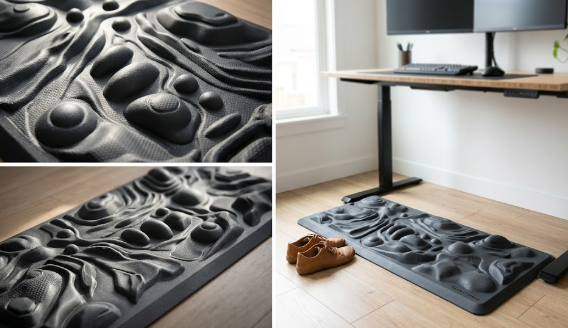
Beyond that, consider the surface and edges. Some mats are flat, while terrain mats add gentle contours, mounds, and edges that invite you to shift and stretch your feet, encouraging the micro-movements that keep you comfortable. Beveled, anti-curl edges matter because a mat that curls up at the corners becomes a trip hazard, and a non-slip backing keeps it planted. Finally, match the size to your desk and how much you move while standing.
The best standing desk mats for back pain in 2026
WellnessMats Anti-Fatigue Mat — Best premium and best material
If you want a mat that will outlast every cheaper rival, WellnessMats is the benchmark. Its all-polyurethane construction delivers the firm-yet-cushioned support that reduces fatigue without the wobbly instability of overly soft gel mats, and crucially it springs back to shape immediately rather than flattening over time. It is more expensive than most, but it is built to last for years of daily standing and is backed by a long warranty, which makes it a sound long-term investment for serious standing-desk users. You can see the full range on the official WellnessMats site.
Vari ActiveMat — Best overall
The Vari ActiveMat strikes an excellent balance of comfort, durability, and thoughtful design, which makes it our pick for most people. It uses a high-density core that resists flattening, a non-slip bottom, and beveled anti-curl edges, and it adds raised side panels and a dedicated stretching area so you can roll and flex your feet while you work. That built-in encouragement to move is exactly what helps your back during long standing sessions. It sits in the mid-to-premium range and comes from a brand with a strong track record in standing-desk gear. See it on the official Vari site.
Topo by Ergodriven — Best terrain mat for active standing
The Topo is the best-known terrain mat for a reason. Instead of a flat surface, it features sculpted mounds, edges, and contours designed to give your feet somewhere to move, stretch, and shift weight throughout the day, which keeps circulation going and discourages the static standing that causes fatigue. People who find flat mats boring or who tend to lock into one position often get on best with a terrain design like this. It is a great choice if you want your mat to actively prompt movement rather than just cushion you.
FlexiSpot Anti-Fatigue Mat — Best large mat and value
For anyone who wants extra room to move without spending premium money, the FlexiSpot anti-fatigue mat is a well-priced option that comes in larger sizes, giving you space to change foot position and stretch. It is a sensible companion if you already own a FlexiSpot desk, and a solid value pick in general. It will not match the longevity of a polyurethane WellnessMat, but for the price it offers good everyday comfort and a generous standing area.
Sky Solutions Anti-Fatigue Mat — Best budget pick
If you are not ready to invest much, the Sky Solutions mat is one of the best value choices available, offering decent memory-foam cushioning, a non-slip base, and anti-curl edges at a budget-friendly price, with a wide choice of colours and sizes to match your space. As with most foam mats, expect it to soften over time rather than last for years, but as an affordable way to make standing comfortable, it is hard to beat.
A balance board — Best active alternative
If you want to go beyond a static mat, a standing-desk balance board makes you actively engage your core and legs as you subtly balance, turning standing into gentle movement. Many include textured massage points to stimulate the feet. It is not for everyone and takes some getting used to, but for people who want maximum activity while working, it is a fun and effective option to alternate with a regular mat.
At-a-glance comparison
The table below summarises the picks above. Prices are approximate United States figures and can change, so always confirm current pricing before buying.
| Mat | Best for | Material | Approx. price |
|---|---|---|---|
| WellnessMats | Premium & longevity | Polyurethane | ~$130 – $180 |
| Vari ActiveMat | Overall | High-density core | ~$95 – $120 |
| Topo by Ergodriven | Active terrain standing | Polyurethane terrain | ~$99 |
| FlexiSpot Anti-Fatigue | Large & value | Foam | ~$40 – $60 |
| Sky Solutions | Budget | Memory foam | ~$30 – $40 |
| Balance board | Active alternative | Wood/plastic | ~$50 – $100 |
How to use a standing desk mat well
A mat works best when you actually move on it. Rather than standing rigidly, shift your weight from foot to foot, change your stance, and use any contours or edges to stretch your calves and arch your feet now and then. Keep the mat positioned so you can stand comfortably at your desk without leaning, and check that the edges lie flat so you do not trip. Remember that a mat does not replace alternating between sitting and standing; it simply makes the standing intervals more comfortable, so keep switching positions through the day as covered in our standing desk guide.
Comfortable, supportive footwear, or going barefoot or in socks on a soft mat, also makes a difference, and a few back pain exercises for remote workers between sessions will do more for your back than any single accessory. If your feet or legs still tire, a footrest for your seated periods can help round out the setup. For the full picture, see our home office ergonomic setup guide.
Frequently asked questions
Do anti-fatigue mats really help with back pain?
They can help indirectly. By cushioning your feet and encouraging small, continuous movements, a good mat improves circulation and reduces the static load that causes fatigue and lower-back discomfort during long standing sessions. Research has found reduced discomfort for people prone to lower-back pain when standing on an anti-fatigue mat versus a hard floor. A mat is a comfort aid, not a medical treatment, so persistent pain should be discussed with a professional.
What thickness should a standing desk mat be?
Around three-quarters of an inch is a good target for most people. That is firm enough to support you without sinking, while still cushioning pressure. Mats that are too thin barely help, and ones that are too soft can feel unstable and tiring rather than supportive.
Why does material matter so much?
Because it determines how long the mat keeps working. High-quality polyurethane returns to shape instantly after compression and resists flattening for years, whereas cheaper foam gradually compresses and loses its cushioning with daily use. If longevity matters to you, prioritise polyurethane or a high-density core over basic foam.
Flat mat or terrain mat: which is better?
Both work; it comes down to how you stand. A flat mat offers straightforward cushioning, while a terrain mat with contours actively invites you to shift and stretch, which suits people who tend to stand still and need encouragement to move. If you fidget naturally, a flat mat is fine; if you lock into one position, a terrain mat may serve you better.
The bottom line
If you have a standing desk, a good anti-fatigue mat is an inexpensive upgrade that makes standing genuinely comfortable and kinder to your lower back. For most people the Vari ActiveMat is the best all-round choice, WellnessMats is the premium pick that lasts for years, and the Sky Solutions mat is the budget-friendly entry point. Whichever you choose, prioritise material over price, keep moving while you stand, and remember to alternate between sitting and standing. To complete your workspace, pair it with a supportive seat from our best ergonomic chairs for back pain guide.
Affiliate disclosure: This article contains affiliate links. If you buy a product through one of them, we may earn a small commission at no extra cost to you. This never influences which products we recommend.
Medical disclaimer: We are not doctors or physiotherapists, and this article is for general informational purposes only. It is not medical advice and should not replace consultation with a qualified healthcare professional. If you have persistent, severe, or worsening back pain, please seek advice from a licensed medical provider.