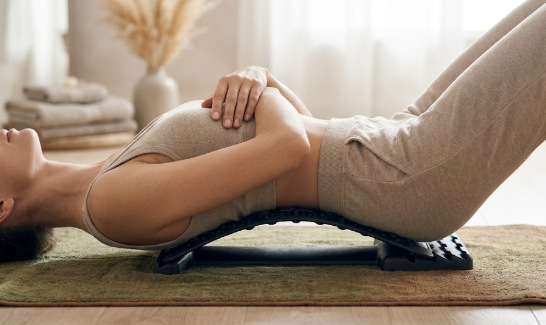
Spend your day glued to an office chair and you know the feeling: a compressed, tight lower back that starts as a dull ache and follows you home. We all know we should take breaks to stretch, but sometimes it helps to have a little mechanical assistance to get a deeper release. That is where back stretching devices come in. The most common, an arched orthopedic stretcher, gently extends the lumbar spine when you lie back over it, stretching tight muscles, opening up the front of the body after hours of sitting, and encouraging movement in stiff lower-back joints.
It is worth setting expectations honestly: these are best thought of as simple daily stretching tools, not true medical spinal decompression, and the right one for you is the one that matches your back and your tolerance, not the one with the highest arch or the most pressure nodes. This guide covers the best back stretching devices for office workers in 2026 and how to use them safely, so please read the safety section first. They work best alongside the active stretches in our back pain exercises for remote workers guide.
Important safety information: read this first
The most important safety feature on any back stretcher is adjustable intensity, because it lets you start gently and increase only as your back adapts. Always begin at the lowest arch or setting, ease onto the device slowly, and stop immediately if your pain increases rather than eases. Do not use a back stretching or traction device if you have a recent spinal fracture, severe osteoporosis, spinal instability, or have had recent back surgery without medical clearance. If you are pregnant, consult your healthcare provider before using any traction device. If you have a herniated disc, sciatica, or any diagnosed spinal condition, start at the lowest setting only with professional guidance and stop if symptoms worsen, since forced extension can aggravate some conditions. And as always, new, severe, or unexplained back pain should be assessed by a healthcare professional rather than self-treated with a device.
What to look for in a back stretcher
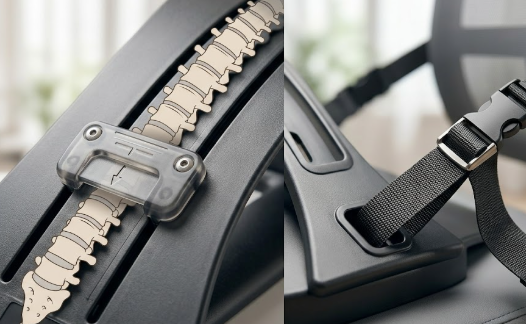
Adjustability is the single most important factor, so prioritise a device with three or four arch or height levels that let you progress gradually and safely. Comfort matters more than people expect: many cheap arched stretchers feel like a bed of nails, so look for a padded, supportive mid-section that protects your spine, with acupressure nodes being an optional bonus rather than a goal. Check that the device fits your body, since fixed arches can be too long for shorter torsos, leaving the peak in the wrong spot. For office use, a model with a strap that secures it to a chair adds versatility, doubling as posture support during the day. Finally, weigh the weight capacity, portability, and whether there is a warranty or trial period so you can return it if it is uncomfortable.
The best back stretching devices for office workers in 2026
Everlasting Comfort Back Stretcher — Best overall
The Everlasting Comfort back stretcher tops most lists because it solves the biggest barrier to using these devices: discomfort. Its memory-foam pad and breathable mesh cover deliver a deep lumbar stretch without the bed-of-nails sensation of cheaper plastic arches, which means you are far more likely to use it consistently rather than let it gather dust. With three adjustable arch settings and a strap to secure it to an office chair or car seat, it works as both a floor stretching tool and daily posture support. For most office workers, it is the smartest, most usable choice.
MINOLL Multi-Level Back Stretcher — Best for control and beginners
The MINOLL stands out for giving you the most control over intensity, which is the single most important factor for safety and results. Unlike arches that jump straight into a deep stretch, its four height levels let you increase gradually, making it ideal for beginners and for long-term daily use. It is well suited to office workers, drivers, and anyone who sits for extended periods and wants to build up their stretch safely over time rather than diving into the deep end on day one.
A budget multi-level stretcher — Best on a budget
If you want to try a back stretcher without spending much, several budget multi-level arched boards deliver effective spinal extension at a low price, typically with three or four adjustable settings and a foam strip down the middle for cushioning. They will not match the padding or refinement of the top picks, but as an affordable way to find out whether arched stretching helps your back, a well-reviewed budget board is a sensible, low-risk entry point. Just start at the lowest level.
Teeter P2 Back Stretcher — Best leverage-based decompression
For those who want gentle decompression without a large inversion table, the Teeter P2 is a compact, leverage-based device that uses foam roller supports behind your legs to amplify your push into a deeper, controlled stretch. It is an FDA-registered device built from lightweight steel, weighs under four pounds, and is easy to store or travel with, making it a practical middle ground for office workers who want active, self-controlled traction. Many users who cannot tolerate inversion tables find it a comfortable alternative for easing end-of-day stiffness.
A heated acupressure or stretch mat — Best gentle, passive option
If arched stretchers feel too aggressive, a padded mat that combines gentle, gradual stretching with heat and massage-style motion is a softer alternative. Instead of forcing your spine into a curve, you simply lie down, choose your settings, and let the device gently loosen tight muscles over time. This makes it especially suitable for people with muscle-related stiffness who want a relaxing recovery tool rather than a deep back-cracking stretch, and the added heat helps ease tension much like a heating pad.
At-a-glance comparison
The table below summarises the picks above. Prices are approximate United States figures and can change, so always confirm current pricing before buying.
| Device | Best for | Type | Approx. price |
|---|---|---|---|
| Everlasting Comfort | Overall | Padded arched stretcher | ~$30 – $40 |
| MINOLL Multi-Level | Control & beginners | 4-level arched stretcher | ~$25 – $35 |
| Budget multi-level board | Budget | Arched stretcher | ~$15 – $25 |
| Teeter P2 | Leverage decompression | Manual leverage device | ~$60 – $100 |
| Heated acupressure mat | Gentle / passive | Heated stretch mat | ~$50 – $120 |
How to use a back stretcher safely
Place the device on a firm, comfortable surface like a carpet or yoga mat, set it to the lowest level to begin, and lower yourself onto it slowly rather than dropping back. Start with just a couple of minutes, breathe, and let the muscles relax into the stretch instead of forcing it, increasing the level and duration only gradually over days and weeks as your back adapts. A short daily session of around five to ten minutes is far more effective and safer than an occasional long, aggressive one. Stop at once if you feel sharp or increasing pain. Stretching tools work best as part of a wider routine, so combine them with gentle back pain exercises, a foam roller for the surrounding muscles, and warmth from a heating pad if stiffness is an issue, and remember that the real fix for sitting-related tightness is a supportive setup and regular movement.
Frequently asked questions
Do back stretchers actually work?
For many people they provide relief by gently extending the lumbar spine, stretching tight muscles, and easing the compression that builds up from sitting. They are best understood as simple daily stretching tools rather than medical decompression devices, and results depend on consistent, gentle use. They can be a helpful complement to stretching, strengthening, and a good setup, but they are not a cure, and severe or persistent pain needs professional assessment.
Are back stretchers safe for a herniated disc or sciatica?
Use extreme caution. Some devices are marketed for these conditions, but forced extension can aggravate certain disc and nerve problems, so anyone with a herniated disc, sciatica, or a diagnosed spinal condition should only use one with professional guidance, start at the lowest setting, and stop immediately if symptoms worsen. If you have radiating leg pain, numbness, or weakness, see a healthcare provider before using any stretching or traction device.
How do I choose the right intensity?
Always start at the lowest arch or level and increase gradually only as your back adapts, which is why an adjustable device is so important. The best stretcher is not the one with the highest arch or the most acupressure spikes; it is the one that matches your flexibility and pain tolerance. If even the lowest setting feels too intense, build up over several sessions or choose a gentler, padded or heated option.
Can I use a back stretcher at my desk?
Some arched stretchers come with a strap that secures them to an office chair, letting them double as lumbar posture support during the workday, while the deeper stretching is usually done lying on the floor for a few minutes. Compact, portable devices are easy to keep at the office for a quick seated stretch, but the most effective lumbar extension generally happens on the floor.
The bottom line
A back stretching device can be a simple, affordable way to ease the compressed, tight feeling that builds up from a day in an office chair, as long as you choose an adjustable one and use it gently. The Everlasting Comfort stretcher is the best all-round choice for comfortable daily use, the MINOLL is ideal for easing in gradually, and the Teeter P2 offers controlled leverage-based decompression. Start at the lowest setting, build up slowly, stop if pain increases, and pair the stretching with movement and a supportive setup. For active stretches that need no equipment, see our back pain exercises guide.
Affiliate disclosure: This article contains affiliate links. If you buy a product through one of them, we may earn a small commission at no extra cost to you. This never influences which products we recommend.
Medical and safety disclaimer: We are not doctors, physiotherapists, or medical professionals, and this article is for general informational purposes only. It is not medical advice, diagnosis, or treatment. Back stretching and traction devices are not suitable for everyone and can aggravate certain conditions if misused. Start at the lowest setting, increase gradually, and stop if pain increases. Do not use one if you have a recent spinal fracture, severe osteoporosis, spinal instability, or recent back surgery without medical clearance, and consult a qualified healthcare professional before use if you are pregnant or have a herniated disc, sciatica, a diagnosed spinal condition, or new, severe, or unexplained back pain.