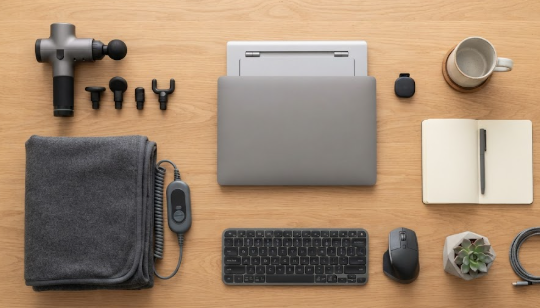
Once you have a supportive chair and a decent desk, the next frontier for a remote worker’s back is the growing world of gadgets: the walking pads, massage guns, heating pads, posture trainers, and clever setup tools that promise to keep you moving, loosen tight muscles, and ease the strain of a sedentary day. Some are genuinely useful. Others are gimmicks. And a few are health devices that help when used correctly but can do harm when they are not. Knowing which is which saves you money and protects your back.
This guide rounds up the best back pain gadgets for remote workers in 2026, grouped by what they actually do, with honest notes on where each fits and where caution is needed. It is the gadget-focused companion to our broader roundup of the best back pain products for remote workers, which covers the foundational furniture. Think of that guide as the foundation and this one as the toolkit that sits on top.
How to think about back-pain gadgets
A simple order of priority keeps you from wasting money. The gadgets that address the root cause, a lack of movement, deliver the most, so they come first. Recovery gadgets that ease muscle tension come next, and they are genuinely helpful as long as you treat them as symptom relief rather than cures. Posture aids can help build awareness but are training tools, not fixes. And none of it replaces the basics: a good chair, a screen at eye level, and regular movement matter more than any gadget. It is also worth saying clearly up front that several of these are health devices with real safety rules, so the sections below flag where care is needed.
Movement gadgets: the biggest win
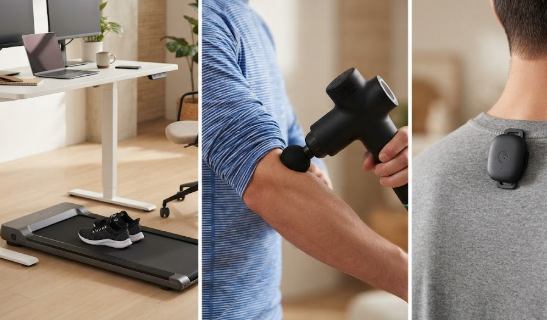
Because the underlying problem with desk work is staying still, the most valuable gadget for most remote workers is one that gets you moving. An under-desk treadmill, or walking pad, lets you walk gently while you work, adding the steady movement that counters static sitting and takes pressure off the spine, and it slides neatly under a standing desk. It is the standout gadget for tackling the cause rather than the symptoms, though you should shop carefully, since build quality varies, and start slowly at a comfortable pace. Our guide to the best under-desk treadmills covers the tested models and how to use one safely.
Recovery and relief gadgets
This is where gadgets are most abundant, and most in need of a careful hand. A massage gun uses percussion to release the tight muscles around the lower back and glutes, and it can be very effective, but it must never be used directly on the spine, kidneys, or bones, only the muscles around the problem, as our best massage guns guide explains. A heating pad soothes muscular stiffness and improves blood flow, ideal for an end-of-day ache, provided you use one with an auto shut-off and never sleep on it, covered in our best heating pads guide. A back stretching device gently extends the lower spine to relieve that compressed feeling, as long as you start on the lowest setting and build up, as our best back stretching devices guide describes. And a TENS unit offers a drug-free way for some people to manage the sensation of pain, though the evidence is mixed and it is not for everyone, which our TENS unit guide details. Each of these eases symptoms; none addresses the cause.
Posture gadgets
Wearable posture correctors and smart posture sensors that buzz when you slouch can build helpful awareness of how you sit, but they are training aids, not cures, and wearing one all day can actually weaken the muscles it supports. Used in short sessions alongside strengthening, they can be a useful nudge, which our posture corrector guide explains in full. The honest takeaway is that a gadget can remind you to sit well, but only your own muscles and habits can hold the posture long term.
Setup and recovery gadgets
Some of the most effective gadgets simply fix your positioning. A laptop stand raises your screen to eye level to stop your head craning forward, the leading cause of tech neck, and it pairs with an external keyboard, as our best laptop stands guide covers. A monitor arm does the same for external displays and frees desk space, and getting two screens positioned correctly is its own small art, walked through in our guide on setting up dual monitors. And because your neck recovers overnight, a supportive cervical pillow is a quietly powerful gadget for anyone whose neck pain starts at the desk, as our best cervical pillows guide explains.
Your gadget toolkit at a glance
The table below summarises the categories and where each fits. You do not need everything; work down from movement to the extras you actually need.
| Priority | Gadget | What it does |
|---|---|---|
| High | Under-desk treadmill | Adds movement, tackles the cause |
| Medium | Laptop stand / monitor arm | Fixes screen height, prevents tech neck |
| Medium | Heating pad | Soothes muscular stiffness |
| Medium | Massage gun | Releases tight muscles (use with care) |
| Supportive | Back stretcher | Gently extends the lower spine |
| Supportive | Cervical pillow | Supports neck recovery overnight |
| Optional | Posture corrector, TENS | Training aid / symptom relief, use with care |
A sensible starter kit
If you want to build up gradually, start with the gadget that adds movement and the one that fixes your screen height, since those tackle the two biggest drivers of desk-related pain. Add a heating pad for cheap, reliable end-of-day relief. From there, a massage gun or back stretcher makes sense if muscle tightness is your main complaint, and a cervical pillow if your neck pain follows you to bed. Treat posture correctors and TENS units as optional extras to try only if you have a specific reason. That order gives you the most benefit for the least spend, and avoids a drawer full of gadgets you never use.
What no gadget can replace
For all their appeal, gadgets are the finishing touches, not the foundation. None of them replaces a supportive chair, a screen at eye level, and, above all, regular movement, which remains the single most effective and completely free thing you can do for your back. The most sophisticated massage gun cannot undo eight hours of slumping in a bad chair, and the smartest posture sensor cannot make sitting still all day healthy. Use gadgets to support an active, well-set-up workday, not to rescue a poor one. And because several of these are health devices, remember that they ease symptoms rather than treating causes, so persistent, severe, or worsening pain is a reason to see a professional, not to buy another gadget. Authoritative, practical guidance on setting up your workspace is available from the Mayo Clinic, and our home office ergonomic setup guide ties the whole picture together.
Frequently asked questions
What is the single best back-pain gadget for a remote worker?
For most people, an under-desk treadmill delivers the most benefit, because it adds the regular movement that directly counters the static sitting behind so much desk-related back pain. If you work on a laptop, a laptop stand paired with an external keyboard is a close second, since it fixes the screen height that causes neck strain. Both tackle causes rather than just symptoms.
Do back-pain gadgets actually work?
Many do, within limits. Movement and setup gadgets address root causes and tend to help the most, while recovery gadgets like heating pads, massage guns, and stretchers provide real symptom relief when used correctly. Posture correctors and TENS units help some people as aids rather than cures. None replaces a good chair, correct screen height, and regular movement, and none is a substitute for medical care for serious pain.
Are health gadgets like massage guns and heating pads safe?
Used correctly, they are generally low-risk, but each has rules. Never use a massage gun on the spine, kidneys, or bones, only the surrounding muscles; always use a heating pad with an auto shut-off and never sleep on it; and start any back stretcher on its lowest setting. Consult a healthcare professional before using these if you are pregnant, have a diagnosed condition, or have persistent or severe pain.
Which gadgets should I skip?
Skip anything that promises to cure back pain, since no gadget can, and be wary of devices you would have to wear or use all day, like posture correctors worn continuously, which can weaken your muscles. Prioritise gadgets that add movement or fix your setup over gimmicky one-trick devices, and only buy recovery or optional gadgets that match a specific need you actually have.
The bottom line
The best back-pain gadgets for remote workers are the ones that get you moving and fix your setup, led by an under-desk treadmill and a laptop stand, backed up by recovery tools like a heating pad, massage gun, or back stretcher used sensibly, and finished with good neck support overnight. Buy in that order, use the health devices carefully, and remember that no gadget replaces a supportive chair, a screen at eye level, and regular movement. For the foundational gear that makes these gadgets worthwhile, start with our roundup of the best back pain products for remote workers.
Affiliate disclosure: This article contains affiliate links. If you buy a product through one of them, we may earn a small commission at no extra cost to you. This never influences which products we recommend.
Medical and safety disclaimer: We are not doctors, physiotherapists, or medical professionals, and this article is for general informational purposes only. It is not medical advice, diagnosis, or treatment. Several of the gadgets discussed are health devices with specific safety rules and contraindications, and they ease symptoms rather than treating underlying causes. Follow each product’s safety instructions, and consult a qualified healthcare professional before use if you are pregnant, have a diagnosed condition, or have persistent, severe, or worsening back or neck pain.