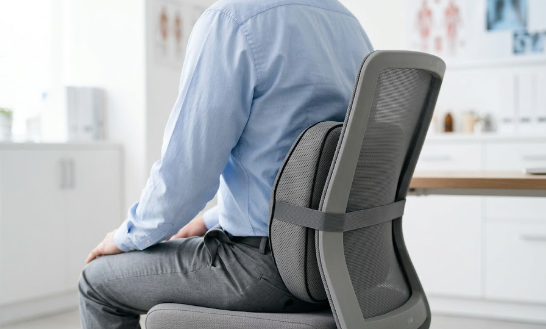
If your office chair leaves your lower back aching by the afternoon, the problem is often a missing piece of support rather than the chair itself. Most ordinary chairs do nothing to fill the gap behind your lower spine, so the natural inward curve of your lower back flattens, your pelvis tilts backward, and pressure piles onto the lower vertebrae hour after hour. A good lumbar support cushion fills that gap, stabilises your pelvis, and lets your upper body stack naturally above it, which reduces the cumulative strain that builds up over a long day rather than just masking it.
A cushion will not turn a bad chair into a great one, but for a fraction of the price of a new chair it can make a real difference to comfort and posture. In this guide we cover the best lumbar support cushions for office chairs in 2026, explain how to choose and position one correctly, and help you decide whether a cushion is enough or whether you would be better served by a chair with built-in support, which we cover in our best ergonomic chairs for back pain roundup.
How we chose these cushions
We focused on the features that determine whether a lumbar cushion genuinely supports your back or just sits there. That means foam quality and density, the shape and depth of the support, how securely it stays in place, breathability for long sessions, and how well it adapts to different chairs. We weighed firm, immediate-support designs against slow-conforming memory foam, since people respond differently to each, and we considered value across budgets. Prices are approximate United States figures at the time of writing and change often, so confirm the current price before buying.
What to look for in a lumbar support cushion
The first decision is feel. Firm, molded foam pushes back against your lower spine the moment you sit down and keeps that pressure consistent whether you have been seated five minutes or five hours, which suits people who want assertive, unchanging support. Slow-conforming memory foam instead hugs the curve of your back and distributes pressure gently, which many people find more comfortable but slightly less corrective. Neither is objectively better; it comes down to preference.
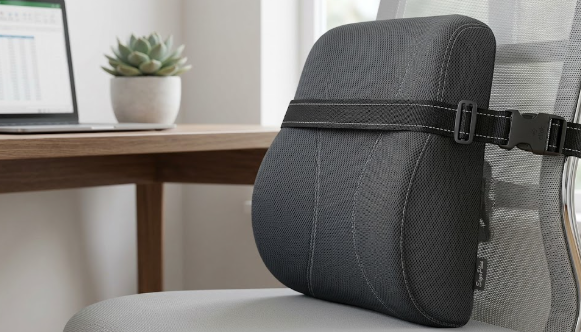
Size and depth matter just as much. A deep cushion fills a large gap in a flat chair but can crowd you forward in a chair that already has some contour, so match the depth to your seat. Adjustable straps are important too, because a cushion that slides down or shifts as you move stops supporting the right spot, and a good strap system anchors it at the height of your lower back. Finally, look for a breathable, removable, washable cover, since you will be leaning against it all day, and consider whether you want a compact lumbar-only pad or a taller pad that also supports the mid-back.
The best lumbar support cushions for office chairs in 2026
Everlasting Comfort Lumbar Support Pillow — Best overall
The Everlasting Comfort lumbar pillow has become one of the most popular choices for a reason: it gets the fundamentals right at an accessible price. It uses supportive memory foam shaped to the natural curve of the lower back, comes with adjustable straps that hold it securely on most office and gaming chairs, and works equally well in a car seat. It is a safe, comfortable starting point for anyone new to lumbar cushions who wants reliable support without overthinking the purchase.
Cushion Lab Ergonomic Lumbar Pillow — Best premium option
For people who want a more sophisticated, ergonomically engineered cushion, the Cushion Lab Ergonomic Lumbar Pillow is the standout. Its dense, rebounding proprietary foam conforms to the S-curve of the spine while still providing firm, pressure-relieving support, and the contoured shape includes a central channel that takes pressure off the spine itself. The breathable, washable recycled cover keeps it cool, and it works well on office chairs, sofas, and car seats alike. It costs more than a basic pillow, but the build quality and support are a clear step up. You can see the full design on the official Cushion Lab product page.
DMI Contoured Foam Lumbar Cushion — Best for firm, immediate support
If you prefer support that is there the instant you sit down rather than foam that slowly conforms, the DMI molded contoured cushion is an excellent pick. A composite board insert behind the foam prevents it from collapsing, so the pressure against your lower spine stays consistent through the whole day. At a relatively compact size and slim depth it works well on chairs that already have some contouring without pushing you too far forward, and its lightweight build makes it easy to move between chairs. It is the choice for people who find soft memory foam too yielding.
Qutool Full Back Support Pad — Best for whole-back coverage
Back discomfort rarely stays in one spot; tension in the lower back often pulls on the muscles higher up. The Qutool is one of the largest pads available, functioning more as a full-back support than a lumbar-only cushion, which makes it a strong choice if you also feel strain in your mid-back and shoulders. Its mesh cover helps with airflow and the double adjustable straps keep it firmly in place. It does take up more of your backrest, so it is best on larger chairs rather than already-contoured ergonomic seats.
AUVON Lumbar Support Pillow — Best for targeted lower-back relief
The AUVON lumbar pillow uses a patented bulge design that concentrates support precisely on the lower back, making it a good option for people who want focused relief at the lumbar curve rather than broad coverage. Its memory foam and strap system keep it positioned well, and it transfers easily between an office chair and a car seat. It is a sensible mid-range choice for anyone whose discomfort is concentrated low in the spine.
BN-LINK Lumbar Support Pillow — Best budget pick
If you simply want to try lumbar support without spending much, the BN-LINK pillow delivers balanced memory-foam support and an adjustable strap at a budget-friendly price. It will not match the refinement of premium options, but it is a low-risk way to find out whether added lumbar support helps you before investing more. For students, second chairs, or anyone on a tight budget, it is a practical entry point.
At-a-glance comparison
The table below summarises the picks above. Prices are approximate United States figures and can change, so always confirm current pricing before buying.
| Cushion | Best for | Foam type | Approx. price |
|---|---|---|---|
| Everlasting Comfort | Overall | Memory foam | ~$30 |
| Cushion Lab Ergonomic | Premium | Dense rebounding foam | ~$50 – $60 |
| DMI Contoured | Firm, immediate support | Molded foam + insert | ~$25 – $35 |
| Qutool | Whole-back coverage | Memory foam, mesh cover | ~$30 |
| AUVON | Targeted lower back | Memory foam (bulge) | ~$25 |
| BN-LINK | Budget | Memory foam | ~$20 – $30 |
How to position a lumbar cushion correctly
A lumbar cushion only helps if it sits in the right place. Position it so it fills the inward curve of your lower back, roughly at belt height, not up between your shoulder blades. Sit all the way back in your chair so your hips are at the rear of the seat and the cushion supports the curve rather than pushing your whole torso forward. Use the straps to anchor it at that height so it does not migrate as you move. You should feel gently supported and upright, not forced into an exaggerated arch; if it feels like it is shoving you forward, the cushion is too deep for your chair.
Remember that support is only part of the picture. Even the best cushion cannot replace movement, so stand and stretch regularly and work in a few simple back pain exercises for remote workers through the day. If you also experience tailbone or sit-bone discomfort, a matching seat cushion can help, and the broader principles of a healthy workstation are covered in our home office ergonomic setup guide. Health authorities such as the Mayo Clinic emphasise that good office ergonomics is about your whole setup and habits, not a single accessory.
Frequently asked questions
Do lumbar support cushions actually work?
For many people, yes. By filling the gap behind the lower spine, a cushion helps maintain the natural lumbar curve and stabilises the pelvis, which can reduce the strain that builds up during long periods of sitting. The effect depends on using the right cushion in the right position. A cushion is a supportive aid, not a medical treatment, so persistent or severe pain should be discussed with a healthcare professional.
Memory foam or firm foam: which is better?
It comes down to preference. Firm, molded foam offers assertive, consistent support from the moment you sit and suits people who want their posture actively held. Memory foam conforms gradually to your back for a softer, body-hugging feel. If you are unsure, a mid-firm memory foam cushion is a comfortable middle ground for most people.
Should I buy a cushion or a chair with built-in lumbar support?
A cushion is the affordable, flexible option and can transform an otherwise unsupportive chair, but a quality ergonomic chair with adjustable built-in lumbar support generally provides more precise and durable support. If your chair is otherwise good, start with a cushion; if it offers no support at all and you sit for many hours daily, investing in a proper chair may serve you better in the long run.
Can I use the same cushion in my car?
Most of the cushions here work in a car seat as well, which is part of their appeal, and the strap systems usually adapt to both. Just make sure the cushion does not interfere with safe driving posture or headrest position, and that it stays securely in place.
The bottom line
A good lumbar support cushion is one of the cheapest, fastest ways to make a long sitting day kinder to your lower back. For most people the Everlasting Comfort pillow is the easy, reliable choice, while the Cushion Lab pillow is the premium upgrade and the DMI cushion is best for firm, immediate support. Choose the feel and depth that match your chair and body, position it at the curve of your lower back, and keep moving throughout the day. If your chair offers no real support at all, it may be worth pairing your search with our guide to the best ergonomic chairs for back pain.
Affiliate disclosure: This article contains affiliate links. If you buy a product through one of them, we may earn a small commission at no extra cost to you. This never influences which products we recommend.
Medical disclaimer: We are not doctors or physiotherapists, and this article is for general informational purposes only. It is not medical advice and should not replace consultation with a qualified healthcare professional. If you have persistent, severe, or worsening back pain, please seek advice from a licensed medical provider.