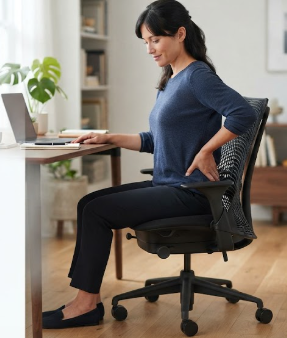
If you have sciatica, you already know that sitting can turn a manageable ache into a sharp, radiating pain that travels from your lower back down your leg. Hours in a poorly designed chair add pressure exactly where you do not want it, and a normal workday becomes a battle. The right ergonomic chair will not cure sciatica, that needs to be said clearly, but it is one of the most powerful tools you have for reducing the mechanical pressure that aggravates the nerve, helping you sit through the day with less pain.
This guide covers the best ergonomic chairs for sciatica in 2026, explains the chair features that matter most for nerve pain, and is honest about what a chair can and cannot do. Sciatica is usually a symptom of an underlying issue, often a disc problem, so please read the important note below and treat a chair as part of your relief, not a substitute for professional care. For the wider field, see our roundup of the best ergonomic chairs for back pain.
Important: what a chair can and cannot do
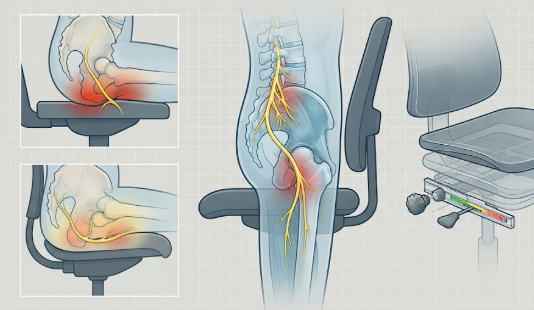
Sciatica is not a diagnosis in itself; it is pain radiating along the sciatic nerve, most commonly caused by a herniated or slipped disc pressing on a nerve root, and it can also involve the piriformis muscle deep in the buttock irritating the nerve. Because the cause is usually structural, no chair is a medical cure. What a well-designed chair can do is reduce the mechanical stresses that worsen sciatica: it can prevent the slouching that compresses nerve roots and ease the seat pressure that irritates the nerve in the buttock and thigh. That genuinely helps many people sit more comfortably, but if you have sciatica, especially with leg pain, numbness, tingling, or weakness, you should be assessed by a doctor or physiotherapist rather than relying on a chair alone. The NHS guidance on sciatica is a useful starting point.
What to look for in a chair for sciatica
For sciatica, the seat design matters even more than the backrest, because flat, hard seats compress the glutes and the backs of the thighs, exactly where the sciatic nerve runs. Prioritise adjustable seat depth so you can set a two-to-three finger gap between the seat edge and the back of your knees, since a seat that is too long presses behind the knees and a too-short one leaves your thighs unsupported. A waterfall seat edge, which slopes gently downward at the front, further reduces pressure on the thighs, and a pressure-distributing seat, whether breathable mesh with no hard spots or high-density foam, spreads your weight to avoid concentrating pressure on the nerve.
One of the most effective features is a forward seat tilt of a few degrees, which shifts your weight from the glutes onto the thighs and decompresses the gluteal region where the nerve can be pinched. Beyond the seat, look for height-adjustable lumbar support positioned at belt level to prevent the backward pelvic tilt that compresses nerve roots, a slight recline of around 100 to 110 degrees rather than a rigid 90, since that distributes hip pressure better, and a dynamic backrest that lets you shift position, because changing posture often is important for keeping pressure off the nerve.
The best ergonomic chairs for sciatica in 2026
Steelcase Leap V2 — Best overall for sciatica
The Steelcase Leap V2 is widely recommended for sciatica because it combines several of the most important features. Its LiveBack system flexes with your spine and maintains lumbar contact through your full range of motion, which matters for sciatica sufferers who need to change position frequently, and its natural-glide recline keeps your lower back supported even as you lean. It offers around two inches of seat-depth adjustment to set the correct gap behind your knees, and its subtly curved seat supports without creating pressure points. Available refurbished for considerably less, it is the all-round choice for most people. See how it compares to the other icon in our Steelcase Leap vs Herman Miller Aeron breakdown.
Herman Miller Aeron — Best for glute and thigh pressure
The Aeron is frequently recommended for sciatica thanks to its seat design. The breathable mesh has no hard spots that can press on the nerve, the waterfall seat edge reduces pressure behind the knees, and crucially, its forward-tilt option shifts your weight forward to decompress the gluteal region, which is exactly where the sciatic nerve can be compressed. PostureFit SL keeps the lower spine and sacrum supported. It is a strong choice for people who find that foam seats compress their glutes, though note the mesh feels firm at first and seat depth is set by choosing the right size rather than adjusting. Specs are on the official Aeron product page.
Autonomous ErgoChair Ultra 2 — Best value
The Autonomous ErgoChair Ultra 2 brings sciatica-friendly features to a mid-range price. Its adaptive lumbar system automatically molds to the curve of your lower spine to reduce nerve pressure without constant fiddling, multiple recline angles let you alternate between upright focus and a more relaxed posture to ease tension across the hips and lower back, and adjustable seat depth keeps your legs supported to prevent the circulation issues that can worsen sciatic pain. For long-hours sitters who want real relief without a premium price, it is the value standout.
Anthros — Best specialized premium chair
The Anthros is a premium chair engineered specifically around the two main origins of sciatica, the lumbar spine and the piriformis muscle. Its dual-back system supports the pelvis and upper back independently to hold the pelvis neutral and restore the lumbar curve, while a generous seat edge and pressure-distributing foam spread weight across the glutes to reduce compression on the piriformis. It is expensive and, like any chair, not a cure, but for serious sciatica sufferers who have tried everything and want a chair built around the problem, it is the most targeted option, usually backed by a money-back trial worth using.
Sihoo Doro C300 — Best budget
If you need relief on a budget, the Sihoo Doro C300 offers a surprising amount of the right features for the price, including a self-adaptive lumbar system that follows your lower spine, adjustable seat depth, and a breathable mesh seat that distributes pressure. It will not match the refinement or forward-tilt features of premium chairs, but it covers the fundamentals of sciatica-friendly seating well, making it a sensible entry point. Our guide to the best office chairs under $300 covers it and similar value options.
At-a-glance comparison
The table below summarises the picks above. Prices are approximate United States figures and can change, so always confirm current pricing before buying.
| Chair | Best for | Key sciatica-friendly feature | Approx. price |
|---|---|---|---|
| Steelcase Leap V2 | Overall | LiveBack + seat depth adjustment | ~$650 (refurb) – $1,100 |
| Herman Miller Aeron | Glute/thigh pressure | Waterfall mesh + forward tilt | ~$1,700+ |
| Autonomous ErgoChair Ultra 2 | Value | Adaptive lumbar, seat depth | ~$499 |
| Anthros | Specialized premium | Targets lumbar & piriformis | ~$1,950 |
| Sihoo Doro C300 | Budget | Self-adaptive lumbar, mesh seat | ~$250 – $300 |
How to set up your chair for sciatica
Set the seat height so your feet rest flat with your knees at roughly a right angle and your hips level with or slightly above your knees, since dangling feet shift pressure onto the glutes and nerve; if your feet do not reach, add a footrest, as covered in our best office footrests guide. Adjust the seat depth to leave a two-to-three finger gap behind your knees, position the lumbar support at belt level, and use a slight recline rather than sitting bolt upright. Most importantly, do not stay still; change position often and break up sitting with standing and walking, which a sit-stand desk makes easy, as covered in our best standing desks guide. If your seat still compresses your glutes, a gel-grid or coccyx-cutout cushion from our best seat cushions guide can relieve that pressure.
Frequently asked questions
Can an ergonomic chair cure sciatica?
No. Sciatica is usually caused by an underlying issue such as a herniated disc, and no chair is a medical cure. A well-designed chair can reduce the seat and posture pressures that aggravate the nerve, which helps many people sit more comfortably, but it treats the mechanical stress, not the cause. Sciatica, especially with leg symptoms, should be assessed and managed by a healthcare professional.
What chair feature matters most for sciatica?
The seat design matters most, because flat, hard seats compress the glutes and thighs where the sciatic nerve runs. Look for adjustable seat depth to avoid pressure behind the knees, a waterfall front edge, a pressure-distributing seat, and ideally a slight forward tilt that shifts weight off the glutes. Adjustable lumbar support and the ability to change positions are also important.
Is the Aeron or the Leap better for sciatica?
Both are excellent but suit different needs. The Aeron’s mesh seat, waterfall edge, and forward-tilt option are great for people whose glutes get compressed on foam seats. The Leap’s adjustable seat depth, subtly contoured seat, and LiveBack support that follows you as you move suit people who shift position frequently. If you cannot decide, our Leap vs Aeron comparison goes into more detail.
Should I also use a standing desk if I have sciatica?
It often helps. Prolonged sitting increases pressure on the lower spine and can worsen nerve irritation, so being able to alternate between sitting and standing and to move regularly can ease symptoms for many people. A chair and a sit-stand desk together let you change position throughout the day, which is one of the most useful things you can do for sciatica at a desk.
The bottom line
For sciatica, the right chair focuses on the seat: adjustable depth, a waterfall edge, even pressure distribution, and ideally a forward tilt to take pressure off the glutes, combined with good lumbar support and the freedom to move. The Steelcase Leap V2 is the best all-round choice, the Aeron excels at relieving glute pressure, and the Sihoo Doro C300 is a capable budget option. Set it up correctly, change position often, and remember that a chair is a tool to reduce pressure, not a cure, so see a professional for proper management. To take pressure off while seated, pair it with a cushion from our best seat cushions guide.
Affiliate disclosure: This article contains affiliate links. If you buy a product through one of them, we may earn a small commission at no extra cost to you. This never influences which products we recommend.
Medical disclaimer: We are not doctors or physiotherapists, and this article is for general informational purposes only. It is not medical advice, diagnosis, or treatment. Sciatica is usually a symptom of an underlying condition, and no chair can cure it. If you have sciatica, especially with leg pain, numbness, tingling, or weakness, please consult a qualified healthcare professional for proper assessment and management rather than relying on a chair alone.