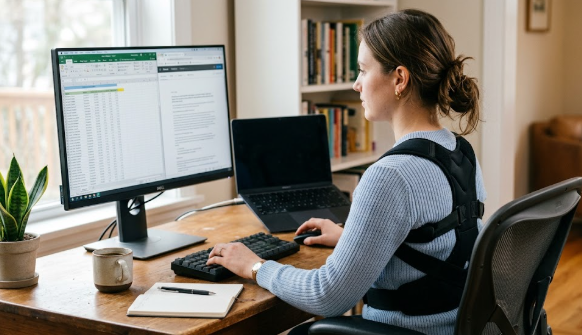
If you catch yourself hunched over your screen by mid-afternoon, shoulders rounded and chin jutting forward, a posture corrector can seem like an appealing quick fix. These wearable braces and smart devices gently pull your shoulders back or remind you when you slouch, helping you become aware of your posture and cueing a more upright position. For many desk workers, that awareness is genuinely useful. But there is an important catch that the marketing rarely mentions, and understanding it is the difference between a corrector that helps and one that gathers dust or even sets you back.
This guide explains honestly what posture correctors can and cannot do, how to use one safely, and which types suit office workers, along with popular picks for 2026. Crucially, a corrector is a short-term training aid, not a cure, and it works best alongside strengthening and movement. Please read the usage section carefully, because using one incorrectly can do more harm than good.
The most important thing to understand first
Experts are consistent on this point: a posture corrector is a temporary training tool, not a permanent solution, and you should not wear it all day. Wearing a brace for hours on end can actually weaken the very muscles it is supporting, because your body lets the device do the work and your own postural muscles switch off, creating dependency. The goal is the opposite, to train your body to hold good posture on its own so that, over time, you need the device less, not more. That means short, deliberate sessions combined with exercises that strengthen the muscles holding you upright. A corrector that replaces your muscles is a problem; a corrector that reminds and retrains them is a help.
Do posture correctors actually work?
The honest answer is: yes, for short-term awareness and as a cue, but not as a standalone fix. Used correctly and paired with strengthening, mobility work, and movement breaks, correctors can reduce upper-back and shoulder discomfort caused by poor alignment from prolonged desk work, and many users report better posture awareness and less slouching within one to three weeks of consistent use. What they will not do is fix lower-back pain caused by disc problems, sciatica, or structural conditions; those require proper assessment and treatment. If your pain persists after a couple of weeks of consistent, correct use, that is a signal to see a physiotherapist or other qualified professional rather than to wear the device longer or tighter. Experts consulted by outlets such as NBC Select stress that the device should support your retraining, not do the work for you.
Types of posture corrector
There are three broad categories. Figure-eight and clavicle braces are simple straps that loop over the shoulders like a backpack and gently draw them back; they are discreet under clothing and well suited to desk use. Full-back braces add more structure and support across the upper back, which some people find helpful for early awareness training when they are first learning where upright should feel. Smart correctors take a different approach entirely: a small sensor sits on your back and vibrates or beeps when you slouch, training you through real-time feedback and often an app, without physically forcing your shoulders anywhere. Each type has the same underlying aim, to make you aware of your alignment so your own muscles can take over; the best one is simply the one you will actually wear consistently and comfortably.
How to use a posture corrector safely
The key is to start small and build gradually. A sensible approach is to begin with around fifteen to thirty minutes a day, often during the mid-afternoon slump when slouching is worst, and increase slowly over the following weeks, without ever wearing it all day. Treat the wear time as a reminder session, not a substitute for your own effort. The part that actually changes your posture long term is the strengthening and mobility work you do alongside it, exercises for the upper back, core, hips, and glutes, plus frequent movement breaks, so a short walk every thirty minutes or so matters more than the brace itself. As your own muscle control improves, wean off the device. Our guide to back pain exercises for remote workers covers strengthening moves that complement a corrector, and a good home office setup reduces the slouching in the first place.
The best posture correctors for office workers in 2026
Upright Go 2 — Best smart corrector
The Upright Go 2 is the standout smart option. A small sensor adheres to your upper back and vibrates gently when you slouch, training you through real-time biofeedback rather than physically pulling your shoulders, and an app guides progressive training sessions. Because it teaches awareness rather than doing the work for you, it aligns well with the goal of building lasting posture habits. It is the pick for people who respond to data and gentle nudges and want a device that grows with them.
BackEmbrace — Best premium physical brace
For those who prefer a physical brace, BackEmbrace is a well-regarded premium option known for comfort and a discreet fit under clothing. Its design gently draws the shoulders back without the bulk or pinching of cheaper braces, which makes it more likely you will wear it for the recommended short sessions. It is a refined choice for desk workers who want effective, comfortable physical cueing during the workday.
Fit Geno Back Brace — Best for more support
The Fit Geno is an adjustable back brace with breathable mesh and Velcro straps that gently pull the shoulders back, offering more structured support across the upper spine. It is one of the most popular correctors on the market and a good choice for people who want firmer feedback while learning what upright feels like. As with any brace, use it for short, building sessions rather than all day, and pair it with strengthening work.
ComfyBrace — Best budget option
The ComfyBrace is a lightweight clavicle and shoulder brace with adjustable straps and breathable fabric that gently encourages an upright position at a budget-friendly price. Users commonly report better posture awareness and reduced upper-back tension after a week or two of consistent, short-session use. For anyone who wants to try a corrector without spending much, it is a sensible, low-risk entry point.
At-a-glance comparison
The table below summarises the picks above. Prices are approximate United States figures and can change, so always confirm current pricing before buying.
| Corrector | Type | Best for | Approx. price |
|---|---|---|---|
| Upright Go 2 | Smart sensor | Biofeedback training | ~$80 – $100 |
| BackEmbrace | Physical brace | Comfort & discretion | ~$60 – $70 |
| Fit Geno | Full-back brace | More support | ~$25 – $35 |
| ComfyBrace | Clavicle brace | Budget | ~$20 – $30 |
Who should be cautious
A posture corrector is not right for everyone or every kind of pain. If your discomfort is in the lower back rather than the upper back and shoulders, a corrector is unlikely to address the cause, and a supportive chair, lumbar support, and professional assessment are more relevant; see our guides to the best ergonomic chairs and best lumbar support. If you have a diagnosed spinal condition, a recent injury, or pain that radiates into the limbs or comes with numbness or weakness, do not use a corrector without guidance from a healthcare professional. And remember that even for the right person, the device is only the training wheels; raising your screen to eye level with a monitor stand and strengthening your postural muscles do more for lasting posture than any brace.
Frequently asked questions
How long should I wear a posture corrector each day?
Start short, often around fifteen to thirty minutes a day, and build up gradually over the following weeks, but do not wear it all day. Wearing a corrector for too long can weaken the muscles it supports and create dependency. Treat each session as a reminder, and reduce your wear time as your own posture improves.
Can a posture corrector fix my back pain?
It may help reduce upper-back and shoulder discomfort caused by poor alignment, especially when combined with strengthening exercises and movement, but it is a short-term training aid rather than a cure. It will not fix lower-back pain caused by disc issues, sciatica, or structural conditions. If pain persists after a couple of weeks of correct use, consult a professional.
Are smart correctors better than braces?
Neither is universally better; they suit different people. Smart sensor devices train awareness through vibration feedback without physically restraining you, which fits the goal of building your own muscle control well. Physical braces give a clearer physical cue that some people prefer when starting out. The best choice is the one you will wear comfortably and consistently for short sessions.
Will I become dependent on a posture corrector?
You can, if you wear it all day and rely on it instead of your own muscles, which is exactly why experts advise short sessions and pairing it with strengthening work. Used as intended, as a temporary reminder while you build better habits, it should reduce your reliance over time rather than increase it.
The bottom line
A posture corrector can be a useful set of training wheels for office workers, increasing awareness and easing upper-back and shoulder tension, but only when used correctly: short sessions, never all day, and always alongside strengthening, movement, and a good setup. The Upright Go 2 is the best smart option, BackEmbrace the comfortable premium brace, and the ComfyBrace a low-risk budget pick. Use it to retrain your posture, not to replace your muscles, and combine it with the exercises in our back pain exercises for remote workers guide for results that last.
Affiliate disclosure: This article contains affiliate links. If you buy a product through one of them, we may earn a small commission at no extra cost to you. This never influences which products we recommend.
Medical disclaimer: We are not doctors or physiotherapists, and this article is for general informational purposes only. It is not medical advice, diagnosis, or treatment. Posture correctors are training aids, not medical devices for treating underlying conditions, and using one incorrectly or for too long can be counterproductive. Consult a qualified healthcare professional before using a posture corrector if you have a diagnosed spinal condition, a recent injury, or pain that is severe, persistent, radiating, or accompanied by numbness or weakness.